Helpful Articles & Blogs
Top 8 TMS Benefits for Haulage Firms in 2026
For many small and mid-sized haulage businesses, spreadsheets and manual dispatch processes have long been “good enough.” But in 2026, rising fuel costs, tighter margins, and increasing customer expectations mean “good enough” is no longer competitive.
That’s where transport management software (TMS) comes in.
Whether you’re running a fleet of 5 vehicles or managing multi-depot operations, modern TMS solutions are designed to streamline operations, reduce costs, and integrate seamlessly with your existing systems.
Below, we break down the top 8 benefits of TMS for haulage firms—and why more logistics companies across Ireland are making the switch.
1. Smarter, Faster Dispatch Planning
Manual dispatching is time-consuming and prone to human error. A dispatch software solution within a TMS automates job allocation, route planning, and scheduling.
Key advantages:
- Optimised routes based on distance, traffic, and delivery windows
- Reduced empty runs and better load utilisation
- Faster response to last-minute changes
For transport managers, this means spending less time firefighting and more time optimising operations.
2. Real-Time Fleet Visibility
Knowing where your vehicles are—and how they’re performing—is critical for modern fleet management.
A TMS provides real-time tracking and status updates, allowing you to:
- Monitor deliveries as they happen
- Share accurate ETAs with customers
- Quickly resolve delays or issues
This level of visibility is especially valuable for small and mid-sized logistics companies looking to compete with larger operators.
Get Full Visibility of Your Fleet
👉Discover how real-time tracking and insights can transform your operations—download the MoveIT TMS brochure
3. Seamless Accounting System Integration
One of the biggest inefficiencies in haulage businesses is disconnected systems. A modern TMS removes this friction through accounting system integration.
Benefits include:
- Automatic invoicing based on completed jobs
- Reduced manual data entry
- Fewer billing errors
By connecting your transport and finance workflows, you improve cash flow and reduce administrative overhead.
4. Better Cost Control and Profitability
Without accurate data, it’s difficult to know which routes, customers, or contracts are actually profitable.
Transport management software provides detailed insights into:
- Fuel costs and usage
- Driver hours and overtime
- Vehicle performance and maintenance
This enables haulage firms to make smarter decisions and protect margins in a competitive market.
5. Improved Customer Service and Communication
Customer expectations in logistics have changed. Clients now expect real-time updates, accurate delivery windows, and transparent communication.
A TMS helps you deliver:
- Automated delivery notifications
- Live tracking links
- Digital proof of delivery (POD)
For logistics companies, this translates into higher customer satisfaction and stronger client retention.
Deliver a Better Customer Experience
👉 See how real-time updates and POD features can elevate your service—explore more in the brochure.
6. Reduced Paperwork and Administrative Burden
Paper-based processes slow operations down and increase the risk of errors.
With a TMS, you can digitise:
- Job orders
- Delivery confirmations
- Driver documentation
This not only reduces admin time but also ensures compliance and easy record-keeping—key for growing haulage businesses.
7. Scalable Operations for Growing Fleets
As your business grows, spreadsheets and manual systems quickly become a bottleneck.
Transport management software is built to scale with you:
- Add vehicles, drivers, and depots with ease
- Manage higher volumes without increasing admin workload
- Standardise processes across the business
For small and mid-sized logistics companies, this scalability is essential for sustainable growth.
8. Stronger Competitive Advantage in 2026
In an increasingly digital industry, adopting TMS is no longer a “nice to have”—it’s a competitive necessity.
Firms using modern dispatch software and integrated systems can:
- Offer faster, more reliable service
- Operate at lower cost
- Deliver a better overall customer experience
In short, transport management software gives you the tools to compete—and win—against larger players.
Is It Time to Move Beyond Spreadsheets?
If your haulage business is still relying on manual processes, now is the time to rethink your approach.
The right TMS can:
- Simplify your operations
- Improve profitability
- Enhance customer satisfaction
And with solutions designed specifically for the Irish market, implementation has never been more straightforward.
Final Thoughts
For haulage firms in 2026, the shift to transport management software isn’t just about technology—it’s about staying competitive in a fast-moving industry.
By embracing smarter dispatch, real-time visibility, and seamless integration, logistics companies can unlock new levels of efficiency and growth.
See How to Streamline Transport with Eureka TMS
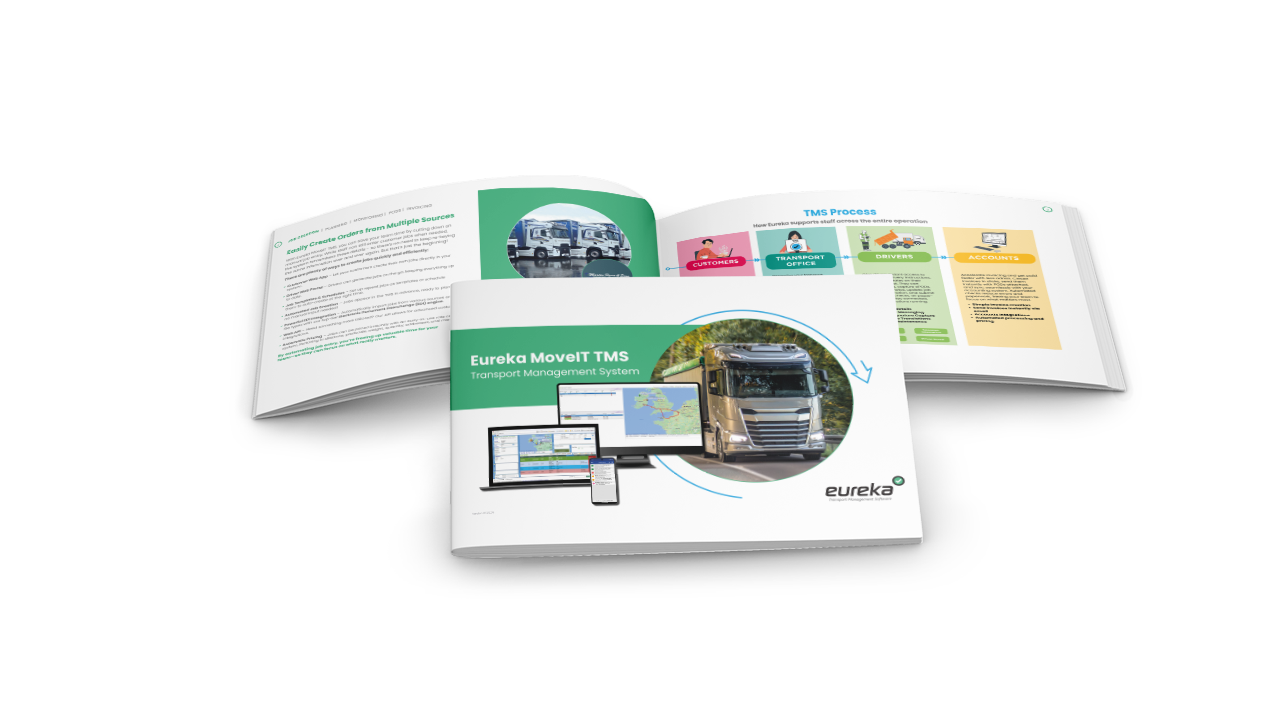
Discover how to improve planning, reduce costs, and gain full visibility across your operations
Frequently Asked Questions About Transport Management Software (TMS)
Yes, a TMS improves customer service by enabling real-time tracking, accurate delivery updates, and digital proof of delivery. This level of transparency helps logistics companies build trust and meet modern customer expectations.
Implementation time varies, but many modern TMS solutions can be set up within days or weeks. Cloud-based platforms are especially quick to deploy, allowing haulage businesses to start improving operations with minimal disruption.
Logistics companies should look for features such as route planning, real-time tracking, dispatch management, reporting, and accounting system integration. Ease of use, scalability, and support for fleet management are also key when choosing the right TMS.
Transport management software helps reduce costs by optimising routes, minimising fuel consumption, reducing empty runs, and improving vehicle utilisation. It also lowers administrative overhead by automating manual processes like invoicing and reporting.
Replacing spreadsheets with dispatch software reduces errors, saves time, and improves visibility across operations. It enables real-time updates, better route planning, and automated workflows—resulting in more efficient and reliable transport management.
Absolutely. Many TMS platforms are designed specifically for small and mid-sized logistics companies. They are scalable, cost-effective, and easy to implement, making them ideal for growing haulage businesses looking to streamline operations without adding complexity.
Yes, most modern transport management software includes accounting system integration. This allows haulage companies to automatically generate invoices, sync financial data, and reduce manual entry, improving accuracy and speeding up cash flow.
A TMS improves dispatch by automating job allocation and route optimisation based on real-time data. It enhances fleet management by providing live vehicle tracking, driver updates, and performance insights, helping transport managers make faster and more informed decisions.
In 2026, haulage businesses face rising costs, tighter margins, and higher customer expectations. A TMS helps by improving efficiency, reducing empty mileage, enabling real-time tracking, and integrating with accounting systems—allowing logistics companies to stay competitive and profitable.
Transport management software (TMS) is a digital system that helps haulage businesses plan, execute, and optimise the movement of goods. It replaces manual processes like spreadsheets by automating dispatch, route planning, job tracking, invoicing, and reporting within one central platform.